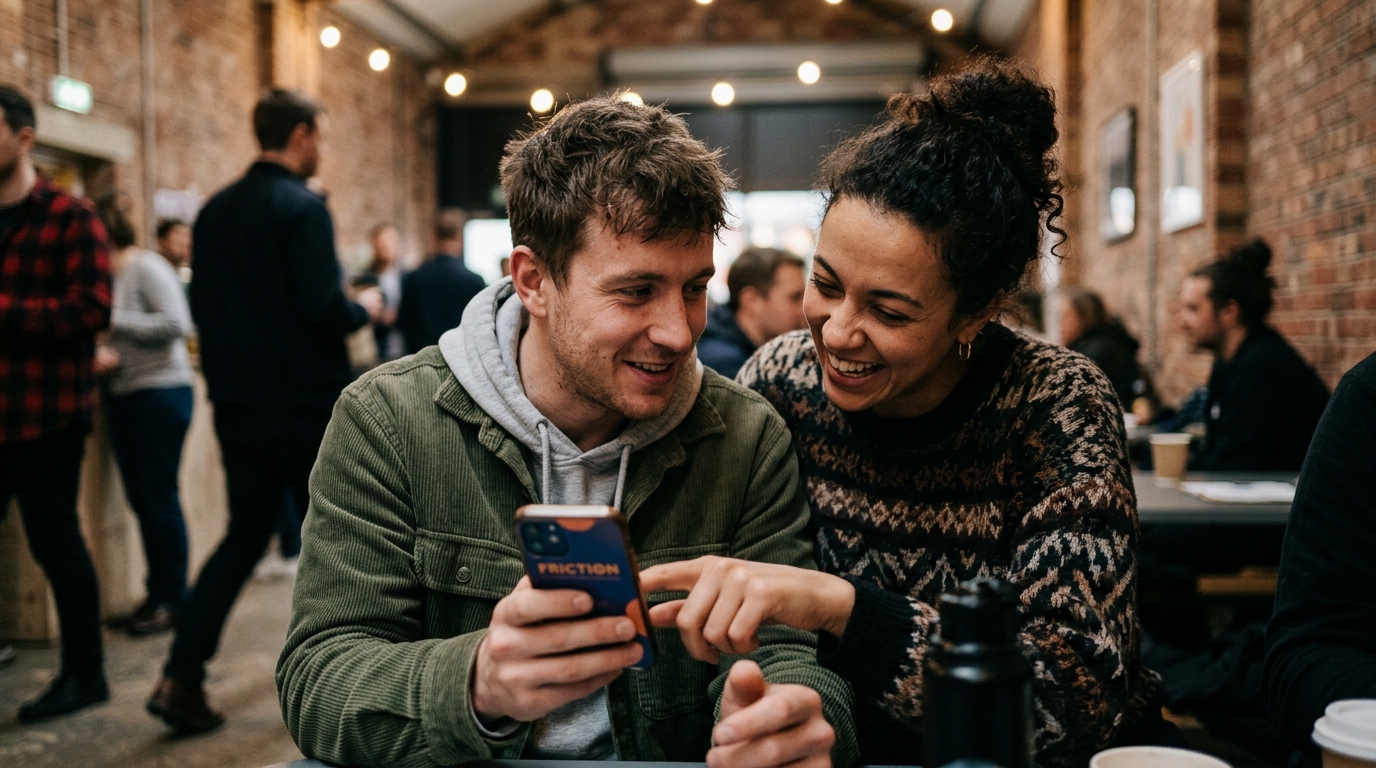
SAN FRANCISCO — A new matchmaking application is gaining rapid market share by abandoning traditional compatibility metrics in favor of pairing users based on their most deeply entrenched behavioral flaws.
The app, called Friction, launched in June by consumer technology incubator Suture Group, bypasses hobbies, career ambitions, and political leanings. Instead, the platform analyzes user metadata—including text response latency, rideshare rating history, and Venmo request descriptions—to identify a primary "relational deficit" for each user.
Once a deficit is identified, the app’s algorithm pairs users whose flaws are mathematically projected to lock together in a state of perpetual, stable irritation. For example, a user flagged as a "chronic conversational interrupter" is systematically paired with a "passive-aggressive silent-treatment specialist."
Marcus Thorne, the chief executive of Friction, developed the concept after observing the high failure rate of traditional dating apps that focus on shared interests.
"Traditional apps sell the illusion of a perfect partner, which leads to inevitable disappointment when you discover they chew with their mouth open or harbor a deep-seated resentment toward customer service workers," Thorne said. "We eliminate the discovery phase. You know on minute one that your match has been legally barred from three local trivia nights for arguing with the host."
To build a profile, users do not upload photos or write bios. Instead, they grant the app permission to scan their email outboxes and smart-home data. The algorithm then categorizes them into one of 48 behavioral profiles, such as "Unsolicited Advice Giver," "Anxious Micromanager," or "Person Who Makes Their Dog Their Entire Personality."
Clarissa Wu, a 29-year-old paralegal from Chicago, was paired with her current partner, David, under the app's "Symbiotic Toxicity" protocol. Wu’s primary deficit was identified as "unable to let any minor factual error go uncorrected," while David was flagged as "frequently mispronounces common words to appear eccentric."
"On our first date, David called the appetizers 'char-cootery' three times, and I spent 45 minutes explaining the etymology of the word while visibly trembling," Wu said. "It was incredibly liberating. Usually, you have to wait three to six months to behave that poorly in front of someone."
Relationship sociologists have noted that the app taps into a growing cultural fatigue with online self-improvement culture and therapy-speak.
"By codifying their pathologies from the outset, users bypass the exhausting process of pretending to be emotionally healthy," said Dr. Evelyn Sterling, a researcher at the Institute for Contemporary Social Dynamics. "It creates a form of mutually assured destruction. Couples stay together not because they are happy, but because they realize no one else would tolerate their specific brand of dysfunction."
Friction’s monetization model includes a $14.99 monthly tier called Friction Prime, which unlocks "Enabler Mode." The feature automatically suggests date locations near parking structures where users are statistically most likely to have a public disagreement.
According to internal data released by Suture Group, Friction currently boasts a 78 percent retention rate. The platform defines a successful match not by marriages or engagements, but by "stabilized friction"—the point at which two people are too exhausted by each other’s behavior to return to the dating market.