COLUMBUS, Ohio — A local dental practice has restructured its patient reception area into a tiered, merit-based seating system designed to encourage daily interdental cleaning through public social stratification.
Oakridge Dental Care, which serves approximately 4,000 active patients in the Columbus metro area, unveiled its new "Gingival Tier Program" on Monday. Under the protocol, patients are assigned to one of three distinct waiting zones based on a mathematical formula that calculates their flossing consistency over the preceding six months.
"We wanted to transition from a model of gentle, ineffective scolding to one of structural transparency," said Dr. Keith Sterling, the clinic’s lead partner. "For decades, patients have lied to us about their flossing habits, and we have politely pretended to believe them. The Gingival Tier Program aligns the physical comfort of our waiting room with the actual state of our patients' periodontal health."
At the top of the clinic's hierarchy is the "Sapphire Lounge," reserved for patients with a Plaque Index score under 10%. Sapphire members enjoy plush ergonomic recliners, a selection of chilled sparkling waters, and noise-canceling headphones. They are also permitted to bypass the front desk entirely by using a biometric fingerprint scanner.
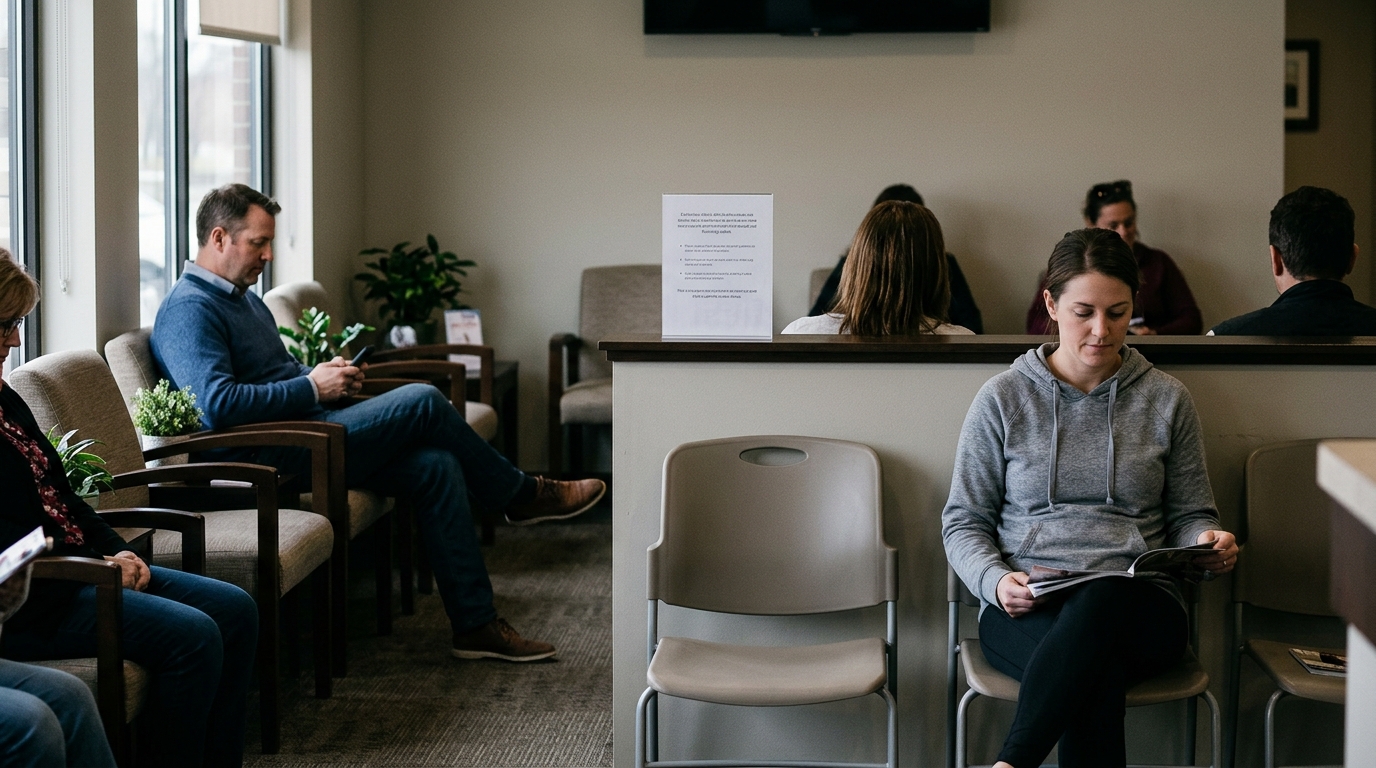
In contrast, the "Standard Tier"—designated for patients who floss "occasionally" or "only when they have steak"—features upright plastic chairs, a single malfunctioning vending machine, and a wall-mounted television playing a continuous, high-definition loop of advanced root planing procedures.
"The Standard waiting area is not a punishment," Sterling emphasized. "It is a reflection of the patient’s choices. If they find the fluorescent lighting harsh or the instructional videos on gingivitis distressing, the solution is in their medicine cabinet, wrapped in 50 yards of waxed nylon."
The program has already introduced a new layer of anxiety to routine cleanings. Local graphic designer Melissa Hayes, currently ranked in the "Interdental Probationary" category, described the experience of arriving for her biannual checkup.
"They put a yellow wristband on me at the door," Hayes said. "I had to sit on a metal bench right next to the trash can. Every time a Sapphire member walked past to get their complimentary cucumber towel, the dental hygienist would sigh softly and write something down on a clipboard. I tried to explain that I had a very busy fiscal quarter, but they just pointed to a sign that said 'Excuses Don't Reach the Molars.'"
According to clinic documentation, the proprietary algorithm used to determine patient placement is highly sensitive. Hygienists use a digital probe to measure pocket depth and bleeding points, entering the metrics into a database that instantly updates the patient's mobile app profile. The software is reportedly sophisticated enough to detect "panic-flossing"—the practice of flossing vigorously in the 48 hours leading up to an appointment.
"We can see the micro-tears in the gum tissue from sudden, desperate flossing," Sterling said. "It’s like trying to study for a final exam during the walk to the classroom. You can’t fool the probe."
As of August, Oakridge Dental Care reported a 34% increase in floss purchases at the clinic’s retail desk. Dr. Sterling noted that while some patients have threatened to transfer their records to other practices, most have chosen to stay and work on their scores.
"Nobody wants to be seen in the Standard Tier by their neighbors," Sterling said, adjusting a velvet rope separating the Sapphire lounge from the main hallway. "It’s amazing what people will do for a slightly softer chair and the right to look down on someone who doesn't use the water flosser."