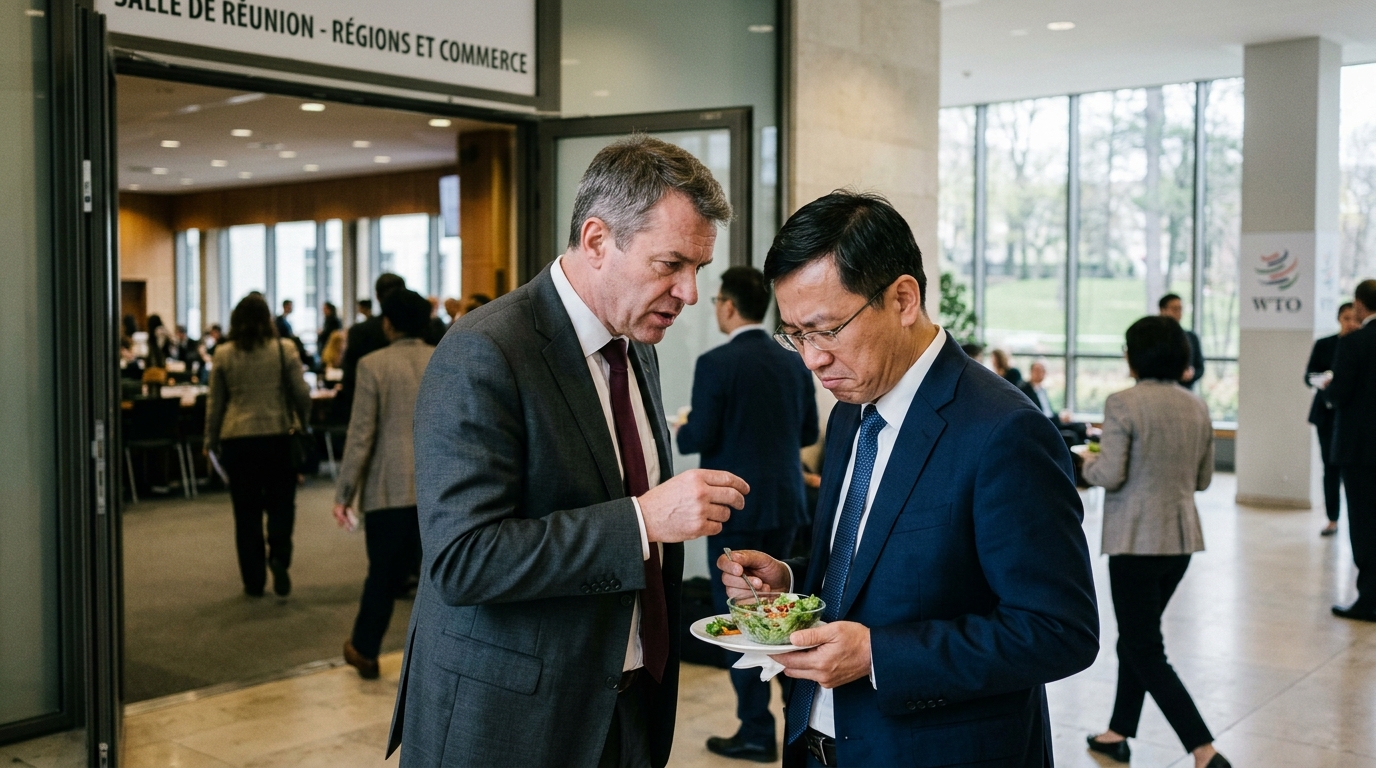
GENEVA — The highly anticipated Global Trade and Tariffs Summit collapsed in Geneva on Thursday after delegates spent 72 straight hours deadlocked over the geopolitical neutrality of the luncheon catering menu, ultimately triggering a walkout by the Mediterranean bloc.
The breakdown occurred during what was meant to be a routine approval of the "Joint Communiqué on Dietary Inclusivity," a preparatory document designed to govern the summit’s working lunches. According to sources close to the negotiations, the dispute began when the Ad-Hoc Committee on Culinary Protocols introduced a draft menu featuring a "Mediterranean-style quinoa bowl."
Delegates from Greece and Italy immediately objected to the dish, arguing that the inclusion of non-certified, Danish-produced feta constituted a "tacit endorsement of agricultural piracy" and violated established geographic indication standards. Efforts to substitute the cheese with a neutral tofu-based alternative were subsequently vetoed by the East Asian delegation, who cited "unacceptable culinary homogenization."
"We cannot negotiate intellectual property rights in the plenary hall while being served intellectual property theft in the cafeteria," said Charles Dumont, France’s Under-Secretary for Gastronomic Optics, during an emergency press conference on the steps of the Palais des Nations. "To ask our ministers to consume a balsamic glaze of non-Modena origin is not diplomacy. It is capitulation."
By Wednesday evening, the dispute had paralyzed the broader trade talks, which aimed to resolve a decade-long dispute over semiconductor supply chains. Instead, senior diplomats from 40 nations found themselves locked in a subterranean conference room, debating whether the salad dressing should be served on the side or pre-tossed—a decision that some delegations argued would establish a dangerous precedent regarding state-mandated intervention.
A British compromise proposal, which suggested a "neutral" buffet of unseasoned steamed chicken and white rice, was rejected by a coalition of Latin American states on the grounds of "sensory deprivation."
"The United Kingdom’s proposal lacked both ambition and flavor," said Marcus Vance, spokesperson for the UK delegation, defending the effort. "We offered a menu that was bland, dry, and entirely incapable of causing offense. It was the culinary equivalent of a blank sheet of paper. It is deeply regrettable that our partners chose seasoning over consensus."
As the deadline for the tariff agreement passed at midnight, the Swiss hosts attempted a final, desperate intervention by offering a fondue bar. However, this was quickly abandoned when legal advisors warned that the communal dipping of bread into a shared pot could be interpreted as a legally binding defense pact.
"When you are dealing with sovereign states, you cannot simply present a shared charcuterie board without a bilateral framework," said Dr. Aris Thorne, Director of the Institute for Diplomatic Protocol at the University of Zurich. "The moment someone reaches for the last fig, you have a border dispute."
The summit has been postponed indefinitely, with delegations returning to their respective capitals. The 3,500 portions of contested quinoa salad prepared for the opening gala have reportedly been declared a diplomatic hazard and placed into climate-controlled storage under United Nations supervision until a disposal treaty can be ratified.