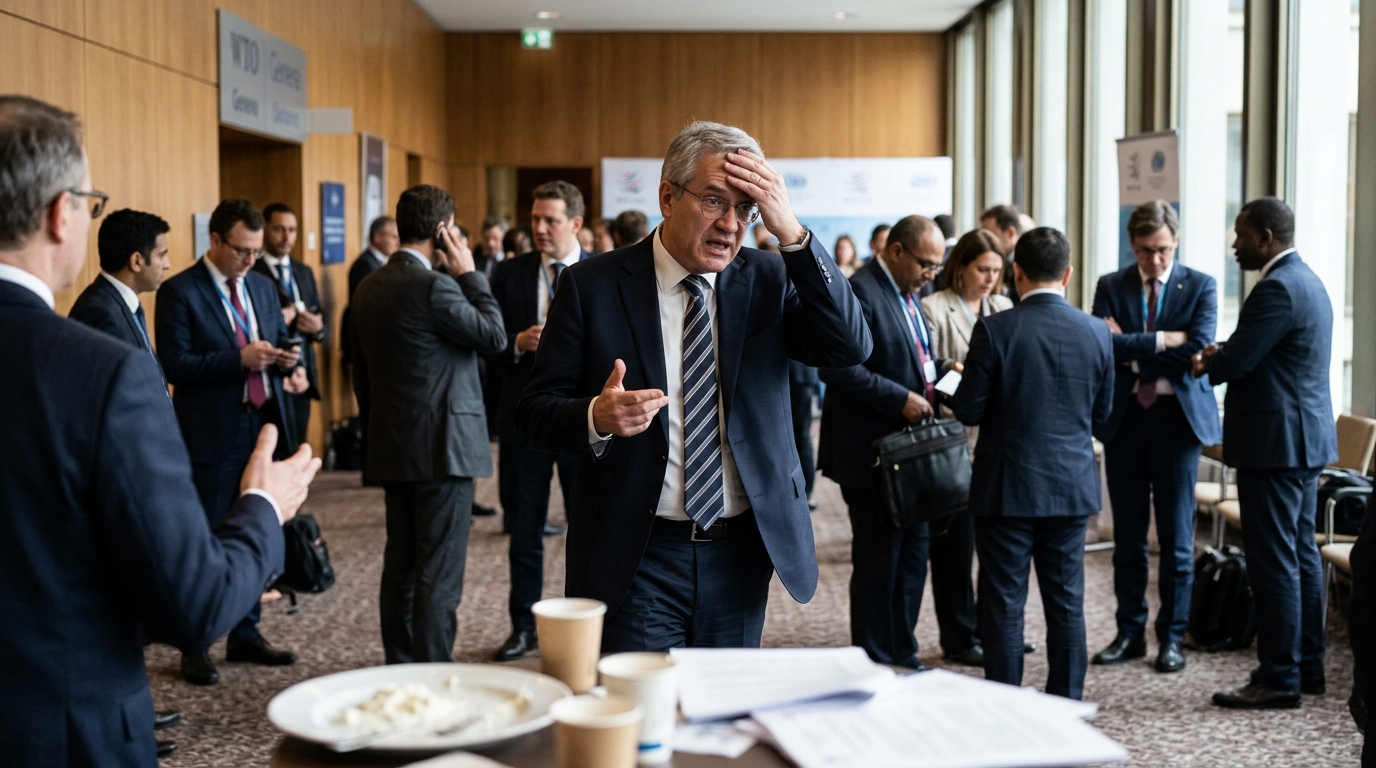
GENEVA — A high-level multilateral summit convened to overhaul global shipping corridors collapsed in disarray Tuesday morning, following a three-day diplomatic deadlock over the selection of a mutually acceptable carbohydrate for the working luncheons.
The talks, which brought together envoys from 40 nations to ratify the Maritime Transit Treaty, broke down during the third reading of the draft menu. What began as a routine logistics meeting degenerated into what negotiators described as an intractable dispute over "starch neutrality."
The conflict reportedly began on Sunday, when the host secretariat proposed a baseline menu featuring a rosemary-roasted fingerling potato. According to sources close to the negotiations, several East Asian delegations immediately objected, citing the selection as an overt gesture of Eurocentric favoritism. A counter-proposal to substitute jasmine rice was blocked by a coalition of North American delegates, who argued that rice represented an unreciprocated concession on agricultural market access.
"We sought a culinary canvas that was entirely devoid of geopolitical subtext," said Dr. Aris Thorne, Chairperson of the Intergovernmental Committee on Dietary Protocol. "Unfortunately, in the modern geopolitical arena, there is no such thing as a neutral starch."
By Monday afternoon, negotiators had drafted the "Quinoa Compromise," a temporary framework that would have allowed nations to opt-out of the grain in favor of a couscous-based alternative. However, the agreement dissolved when the Mediterranean bloc insisted that couscous be classified as a pasta rather than a grain, triggering a procedural dispute that suspended the main trade negotiations for seven hours.
"To accept potato starch as the primary binder for the midday soup would have been to capitulate to a northern European agricultural hegemony," said Jean-Luc Moreau, France’s Deputy Minister for Agricultural Diplomacy, speaking outside the Palais des Nations. "We requested a simple, non-aligned baguette, only to be told that gluten-free protocols from the 2024 Copenhagen Accord forbade its presence on the main table. It was a provocation."
The final blow came Tuesday morning when the Swiss secretariat introduced a non-paper proposing polenta as a consensus carbohydrate. The Italian delegation immediately threatened to veto the entire maritime treaty, objecting to a footnote in the annex that characterized the polenta's texture as "semi-viscous." Shortly thereafter, the North American delegation walked out, claiming the corn-based dish constituted a veiled subsidy for domestic agriculture.
"We saw a complete breakdown of the bilateral gravy agreements," said Sarah Jenkins, a senior fellow at the Institute for Multilateral Logistics. "When you lose the ability to compromise on the starch, you lose the ability to regulate deep-water container vessel emissions. The two are structurally linked."
As of Tuesday afternoon, delegations had begun checking out of their hotels. The shipping corridor treaty, which had taken four years to draft and was projected to reduce global carbon emissions by 8 percent, has been shelved indefinitely.
The secretariat confirmed that the remaining catered food, including 400 portions of unaligned, steam-warmed barley, would be composted under strict United Nations environmental guidelines.