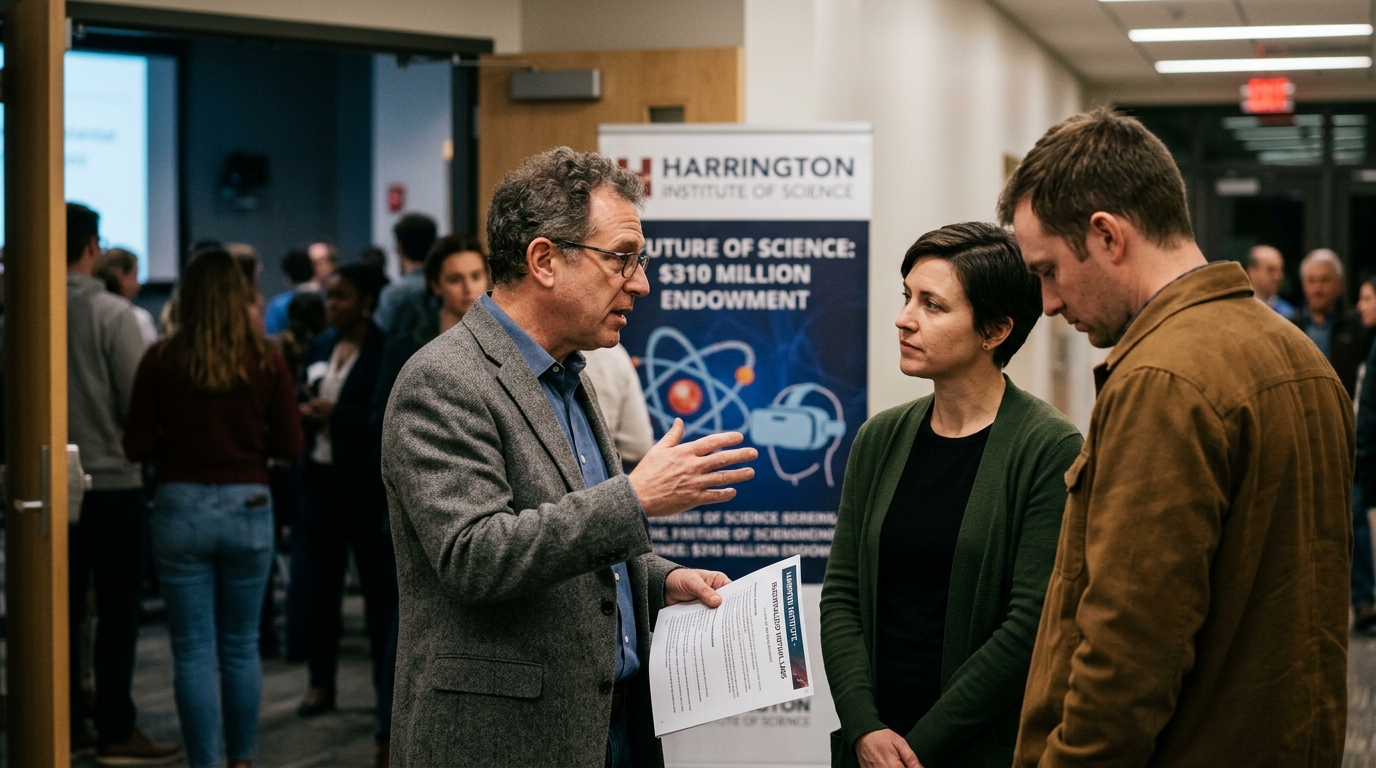
ROCHESTER, N.Y. — The Harrington Institute of Science announced Tuesday that it has committed $310 million of its active endowment to build a fully decentralized, metaverse-based chemistry department, establishing a permanent virtual campus just as commercial developers complete their transition away from the technology.
The initiative, titled "HarringtonVerse," will migrate all undergraduate laboratory courses to a proprietary blockchain network. Under the new curriculum, physical beakers and safety goggles will be replaced by refurbished, first-generation virtual reality headsets, which the university acquired in bulk from a commercial liquidator in Ohio.
"By divorcing our scientific research from the physical tyranny of glassware, we are positioning Harrington at the vanguard of the next digital frontier," said Dr. Arthur Vance, Vice Provost of Capital Allocations. "While some peer institutions remain tethered to traditional, high-maintenance physical laboratories, our students will be synthesizing complex polymers in a boundless, cloud-rendered space where the laws of physics are fully customizable."
To perform basic experiments under the new system, students must first connect a digital cryptocurrency wallet to the university’s learning portal. Standard laboratory procedures have been digitized into individual smart contracts. For instance, conducting a simple acid-base titration now requires students to mint a unique "Titrant Token" on the Ethereum blockchain, a process that administrators note teaches valuable lessons in modern computational finance alongside chemical equilibrium.
However, the transition has introduced unexpected logistical challenges for students.
"I was trying to complete my mid-term organic chemistry lab last Thursday, but the gas fees to ignite my Bunsen burner rose to $148," said Chloe Miller, a sophomore biochemistry major. "I had to wait until 3:00 a.m. for network traffic to subside just so I could heat my virtual solution. Even then, my avatar’s hand glitched through the digital fume hood and dropped our group's only licensed beaker NFT, which we had to rebuy on a secondary marketplace for 0.08 Ether."
The $310 million allocation represents the single largest capital expenditure in the institute's 140-year history. Faculty members have raised concerns regarding the timing of the investment, noting that most major tech conglomerates dismantled their metaverse divisions between 2023 and 2024.
University leadership remains undeterred by the broader market correction. Dr. Vance emphasized that the university's twenty-year licensing agreement with the virtual platform ensures that Harrington students will remain "on the absolute cutting edge of 2021’s technological promise."
Meanwhile, Harrington's physical chemistry building, Halligan Hall, which currently suffers from a leaking roof and a condemned third-floor ventilation system, will remain closed indefinitely. Administrators confirmed that the maintenance budget for the physical facility has been reallocated to fund the rendering of a hyper-realistic, digital reflection pool outside the virtual chemistry wing.