GRAND RAPIDS, Mich. — Oakridge Dental Partners has launched a comprehensive patient-compliance initiative that utilizes smart-dispenser telemetry and targeted messaging to address what clinic partners describe as the systemic crisis of dental dishonesty.
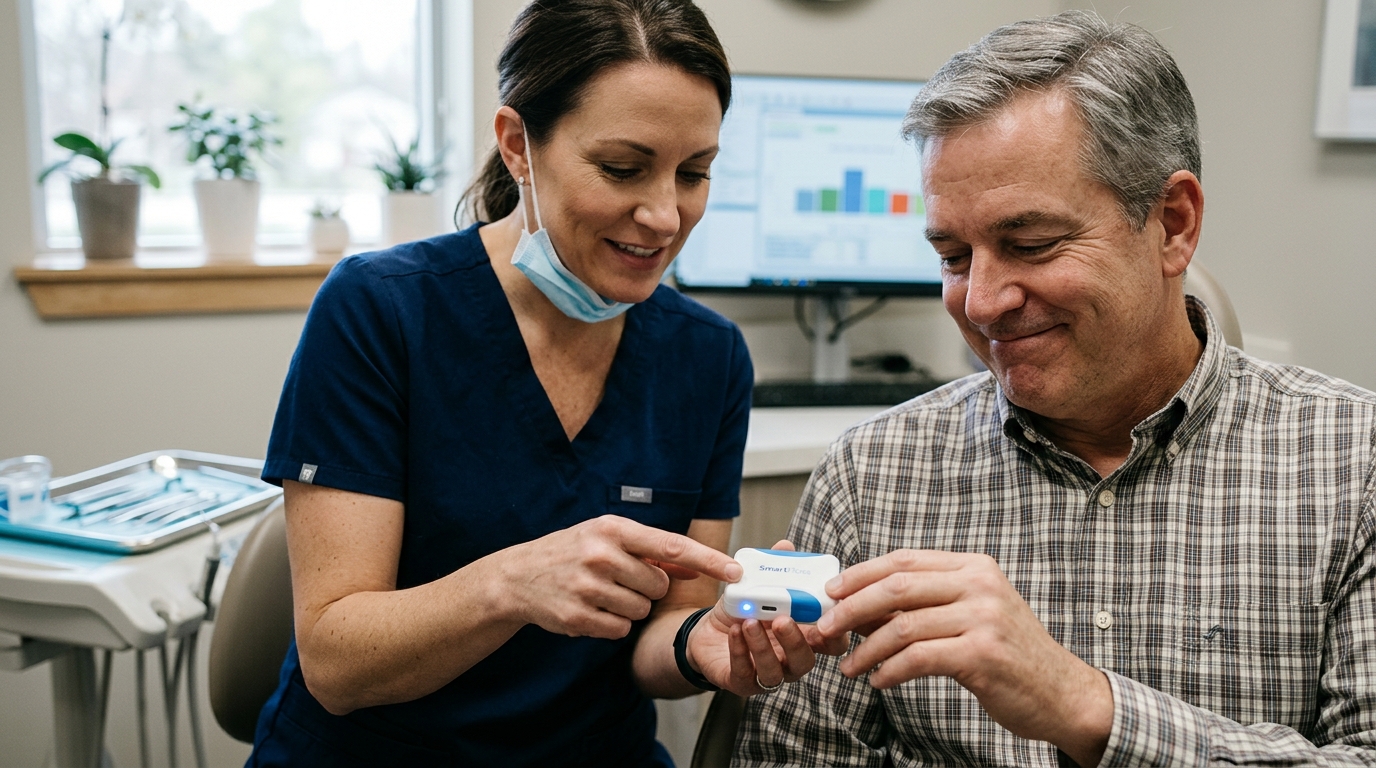
The initiative, titled the Fibrous Accountability Framework, replaces traditional bi-annual checkup reminders with a multi-tiered tracking system designed to monitor and address patients who fail to floss between scheduled cleanings. At the center of the program is the SyncDent 4.0, a proprietary, Bluetooth-enabled floss dispenser distributed to all active patients during their routine visits. The device measures the exact length of wax nylon extracted, the tension applied during use, and the precise timestamp of each session, transmitting the data directly to the clinic’s patient portal.
"We aren't angry; we are simply looking at the data," said Dr. Evelyn Vance, DDS, lead partner at the practice. "When a patient tells us they floss 'three to four times a week' but their interdental papillae present the texture of a bruised plum, it erodes the clinical trust required for effective oral care. The SyncDent removes the emotional burden of lying from the patient."
For patients whose telemetry shows zero activity for three consecutive days, the clinic’s automated communications system initiates Phase 1 of the compliance protocol. Rather than standard appointment reminders, patients receive SMS text messages featuring high-resolution, macro photographs of healthy, vibrant gums alongside the message: "This is what stability looks like. We hope you are experiencing this today."
If inactivity persists past a week, the system escalates to Phase 2. Patients receive direct-mail postcards hand-signed by their hygienist, featuring no text other than a single, hand-drawn question mark next to a sticker of an anthropomorphic bicuspid looking out a window.
Marcus Thornberry, a patient at Oakridge for six years, described the psychological impact of the new system after forgetting to pack his dispenser during a four-day business trip to Chicago.
"By Saturday night, I received an automated email with the subject line: 'We noticed you didn't pack us,'" Thornberry said. "Attached was a PDF of my 2024 bitewing X-rays with the minor bone loss highlighted in a shade of red they called 'Avoidable.' I ended up buying a standard container of floss at a gas station, but without the Bluetooth dispenser, the system couldn't verify it. The texts just got quieter and more disappointed."
Clinic administrators deny that the program is punitive, noting that patients are free to opt out of the smart-dispenser program at any time. However, those who choose to return to manual, unmonitored flossing are required to sign a "Declaration of Active Neglect" in front of a notary public and are rescheduled into the clinic's "Low-Compliance Waiting Area," where the only reading materials are laminated binders detailing the history of trench mouth.
"We just want our patients to take ownership of their gingival health," Vance said. "Every time a patient goes to bed without clearing their interproximal spaces, they are telling us that our eight years of post-secondary education were merely a suggestion."