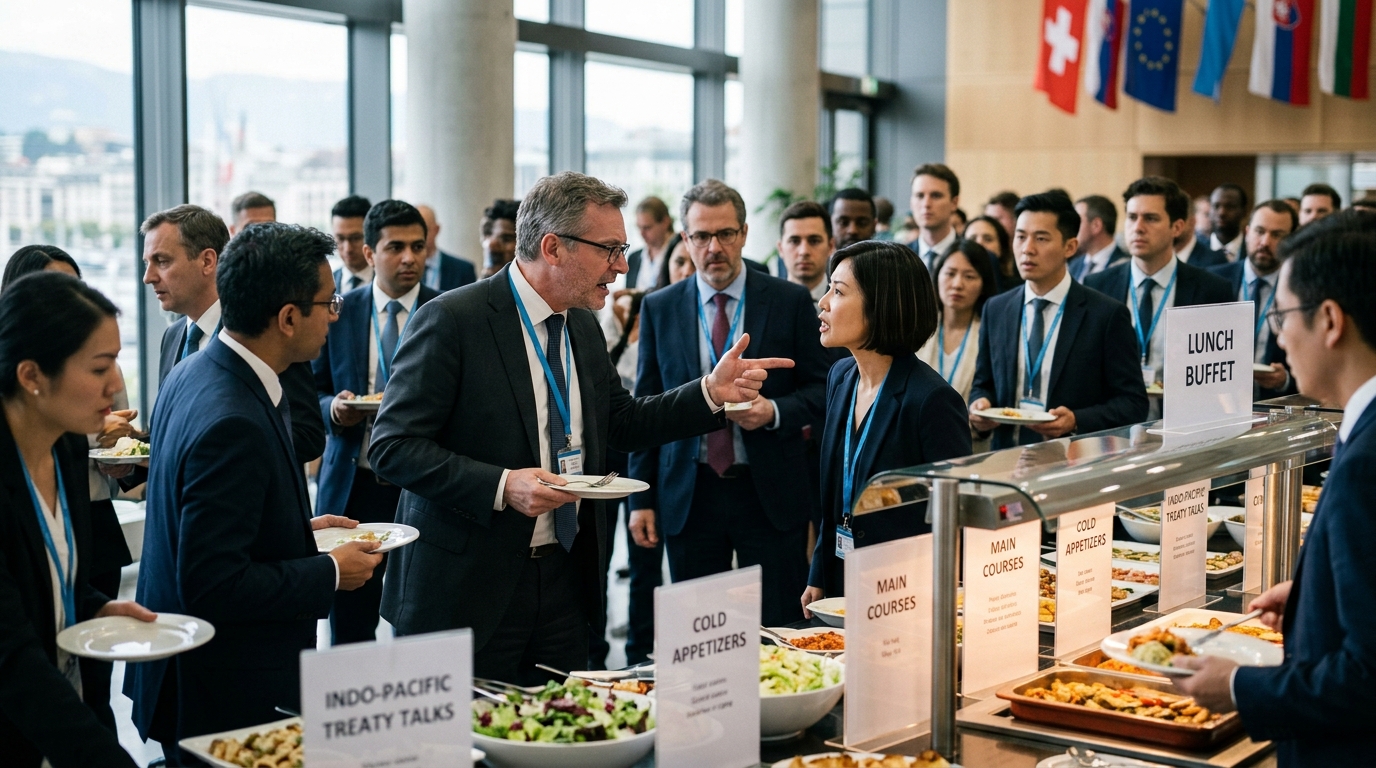
GENEVA — The annual summit of the Trans-Pacific Maritime Coalition collapsed in ruin Monday afternoon after delegates failed to resolve a bitter, three-day diplomatic standoff regarding the structural flow and queueing protocols of the conference center’s lunch buffet.
What was intended to be a routine ratification of a $400 billion shipping and tariff framework instead devolved into a series of emergency bilateral sessions over the "Draft Agreement on Assorted Hot Starches." The breakdown reportedly began during Friday’s luncheon when several European delegates attempted to bypass the cold-salad station to directly access the carving station, triggering an immediate formal protest from the East Asian delegation.
"We cannot talk about open maritime borders when certain parties refuse to respect the established boundaries of the soup station," said Arthur Vance, a senior negotiator representing the North American bloc. "We proposed a multi-lateral, single-file approach with a three-second pause at the ladle. To have our counterparts unilaterally declare the minestrone a 'high-use transit zone' and skip the queue entirely was a clear breach of diplomatic trust."
By Saturday morning, the core trade treaty had been shelved entirely. Negotiators spent the weekend sequestered in emergency subcommittees attempting to draft a 114-page "Code of Conduct for Shared Condiments." Disputes quickly arose over the legal status of the Dijon mustard, with several delegations arguing that placing it exclusively on the Western European table constituted a de facto trade barrier for those seated near the pastry cart.
Efforts to broker a compromise by the Palais des Nations catering staff were unsuccessful. A proposal to transition the summit to individually plated boxed lunches was rejected by a coalition of twenty nations, who argued that pre-determined sandwich selections violated their sovereign rights to self-determination.
"We offered a neutralized, two-tier pasta station with independent marinara and pesto dispensaries," said Beatrice Cloutier, director of conference services for the venue. "But the British delegation insisted that the penne lacked regulatory alignment with the continental garlic bread, and negotiations deteriorated from there. By Sunday, we were dealing with walkouts over the ratio of cantaloupe to honeydew in the fruit bowls."
Economists warn that the collapse of the summit could lead to immediate supply chain disruptions across the globe, with shipping container rates expected to climb by 12 percent by the end of the week.
Despite the high financial stakes, delegates remained resolute as they packed their briefcases on Monday. "A bad deal on the buffet is worse than no deal at all," Vance said, adjusting his lapel as he prepared to board his flight. "If we yield on the carving station today, who is to say where the carving stops tomorrow?"