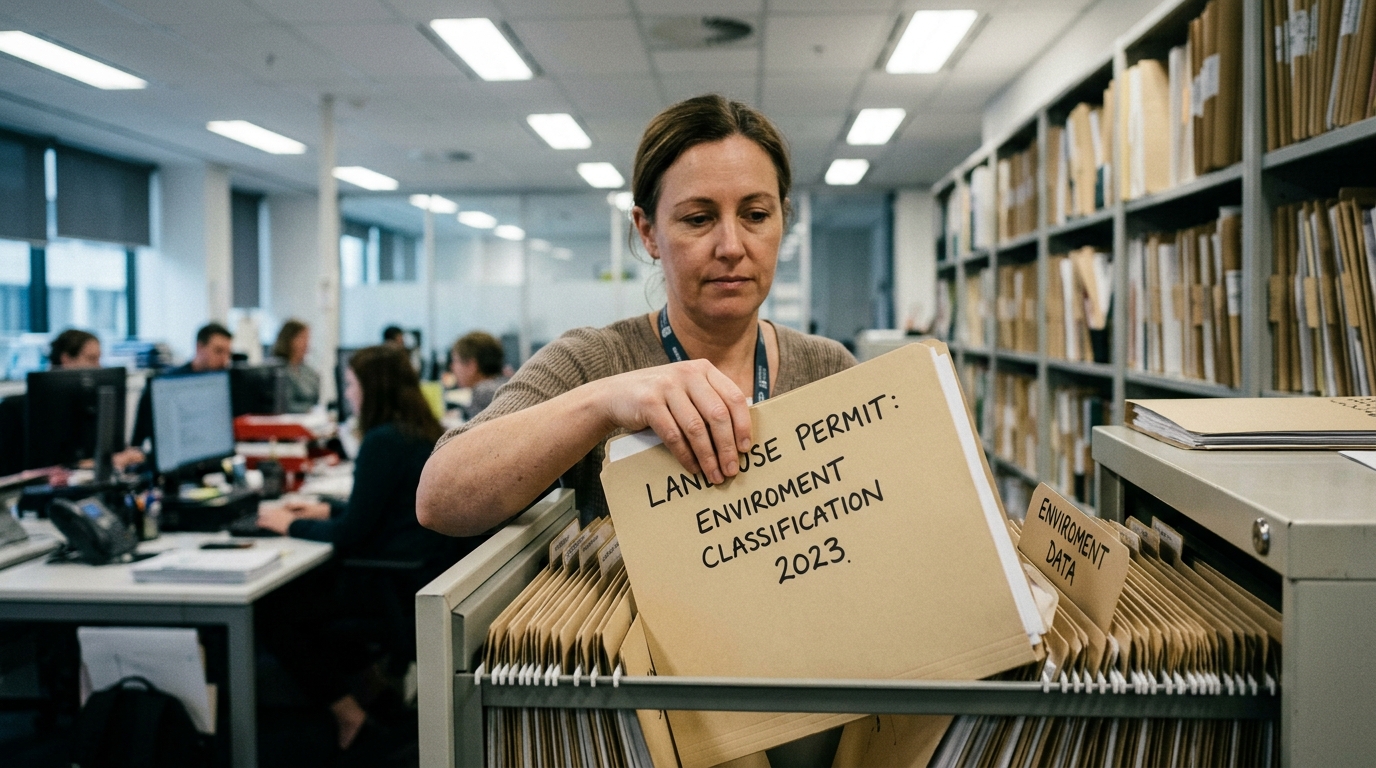
WELLINGTON, New Zealand — The Ministry for the Environment announced Tuesday that it has officially codified the word "enviroment"—without the second "n"—as a distinct legal classification to bypass the administrative cost of correcting a typographical error in thousands of active land-use permits.
The typo, first introduced in a 2018 regional planning template, appeared in 14,200 commercial forestry and agricultural leases. According to a ministry cost-benefit analysis, reissuing the corrected documents would cost the government approximately $4.2 million NZD in administrative labor and legal notices. Instead, parliament passed the Resource Management (Amended Orthography) Act, defining an "enviroment" as "any land mass situated between 10 and 15 meters above sea level where spelling is secondary to developmental urgency."
"Correcting the spelling would have required bilateral signatures from thousands of leaseholders, many of whom are deceased or currently residing overseas," said Helen Vance, Deputy Director of Administrative Continuity. "By simply declaring that an 'enviroment' is a real, legally binding ecological zone, we have preserved the integrity of our filing system at zero cost to the taxpayer."
Legal scholars have noted that the new definition creates unusual regulatory niches. Dr. Alistair Finch, a public policy expert at the University of Otago, observed that the amendment effectively splits the country's conservation efforts.
"Under the new law, a developer operating in an 'environment' must conduct a full environmental impact report," Finch said. "However, a developer in an 'enviroment' is only required to submit an 'enviromental' assessment, a document that currently exists only as a conceptual placeholder."
The Ministry confirmed that a secondary bill is currently being drafted to formally recognize the "Depatment of Concervation" to address a similar printing error on 8,000 official ranger badges.