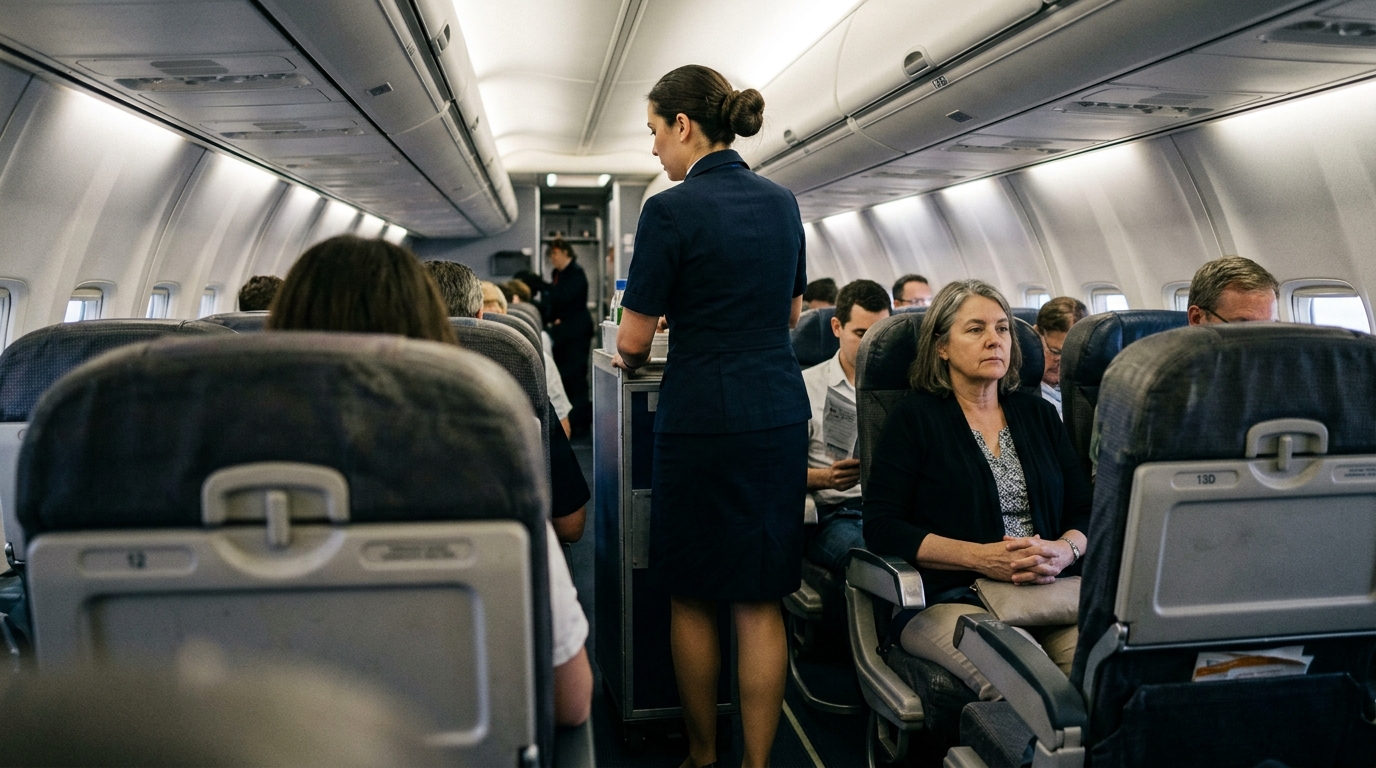
CHICAGO — Vanguard Airlines on Tuesday unveiled a sweeping restructure of its frequent-flyer program, transitioning from a system that rewards distance traveled to one that measures and rewards "operational compliance and physical passivity."
The new program, branded "Vanguard Virtue," seeks to incentivize behaviors that reduce strain on cabin crews and fuel consumption. Under the new guidelines, passengers will no longer earn status through miles flown, but through "Virtue Points" accumulated by minimizing their presence on board.
"For decades, loyalty programs rewarded people just for sitting in a seat while we carried them across the globe," said Arlene Vance, Vanguard’s Vice President of Customer Optimization. "We realized we were rewarding consumption. 'Vanguard Virtue' aligns passenger incentives with our operational realities. The ideal customer is not the one who flies the most, but the one who costs the least to transport."
According to the 114-page program manual, points are awarded dynamically based on a passenger’s compliance profile. Choosing a middle seat in the back row yields 500 Virtue Points. Declining the beverage service entirely—referred to in the manual as "voluntary hydration deferral"—earns 250 points per leg. Passengers who successfully board, stow their luggage, and remain completely motionless for the duration of a flight without adjusting their air vent or reclining their seat are eligible for the "Static Traveler" bonus.
Conversely, the airline will introduce "friction penalties." Requesting a second cup of water, opening an overhead bin after the seatbelt sign has been turned on, or making eye contact with a flight attendant during food preparation will result in immediate point deductions.
The restructuring has already produced a new class of elite travelers. Marcus Thorne, a management consultant from Denver, recently became one of the first passengers to achieve "Ethereal" status, the program's highest tier.
"It’s a mental game," Thorne said from an airport lounge, where he was drinking tap water from his hands to avoid using a disposable cup. "On my last flight to Seattle, I sat in 29E. I kept my elbows pressed tightly against my ribs, refused the Biscoff cookies, and didn’t use the restroom once. By the time we landed, my knees were locked, but I had earned enough points to guarantee group-nine boarding for the next fiscal quarter."
Industry analysts have praised the move as a logical step in airline cost control.
"Airplanes are highly optimized machines, and humans are the least predictable variable," said transit analyst Donald Cheng of the Heartland Institute for Transportation. "If you can train passengers to behave like inert cargo, you reduce fuel burn, cabin wear-and-tear, and labor costs. Vanguard is simply assigning a market value to human compliance."
To assist passengers in tracking their passivity, Vanguard is updating its mobile app to include an "In-Seat Stillness Monitor," which uses the phone's gyroscope to verify that travelers are not shifting their weight excessively in their seats.
For Thorne, the physical discomfort of achieving elite status is a small price to pay for the rewards. "If I can go the next three flights without breathing heavily, I'll be eligible to bypass the gate agent entirely and load myself onto the baggage carousel," he said.